Four ways to assess a running pattern
We sell one of them. What follows also says where the other three are better, because a comparison in which the author wins everywhere is not a comparison.
In one table
Amounts are orders of magnitude, meant for placing things rather than for quoting.
| Camera (this) | IMU sensors | 3D motion lab | Naked eye | |
|---|---|---|---|---|
| Up-front cost | camera + tripod | € 2,000: € 6,000 | € 50,000 and up | nothing |
| Per measurement | € 20,00 or subscription | annual licence | lab time | nothing |
| Set-up per patient | ± 1 minute | 5-10 minutes | 20-45 minutes | none |
| Limb rotation | no | yes | yes | limited |
| Forces and impact loading | no | yes | yes (with plates) | no |
| In-plane joint angles | yes | limited | yes, most accurate | estimate |
| Usable outside the clinic | yes | yes | no | yes |
| Reproducible between raters | yes | yes | yes | no |
| Report for the record | yes | yes | yes | whatever you write |
Against IMU sensors
Sensors on the body measure accelerations and rotations directly. That gives two things a camera cannot: rotation of a segment about its long axis, and a measure of impact loading at landing. For anyone whose question is exactly that, an IMU system is the better instrument, and it stays that way.
Where it struggles is the friction per measurement. Fitting sensors, pairing, calibrating and taking them off again costs five to ten minutes, which is exactly enough to be skipped on a full afternoon. A measurement that does not happen is neither accurate nor inaccurate.
There is also placement. What a sensor reads depends on where it sits. A belt that has shifted slightly gives different numbers, and at a review three months later that is a source of difference with nothing to do with the patient.
Against a motion lab
An optoelectronic system with markers and force plates is the reference standard. Everything measured here is measured more accurately there, in three dimensions, with forces. If there is a lab within reach and the question justifies it, that is the better measurement.
The difference is what a lab costs and how often you go. A six-monthly re-measurement in a lab does not happen; one beside your own treadmill does. For tracking change over time, the measurement you actually take wins.
Against consumer apps
There are phone apps that turn a clip into a score and a list of recommendations. They are cheap and occasionally clever. Two things make them unsuitable for a clinic.
The first is that they rarely tell you when the measurement was not sound. An app that reports a contact time from 30 frames per second with the same confidence as from 240 is giving you a number with nothing underneath it. The second is that they do take the step to a verdict: and the moment software interprets a complaint or proposes treatment, it needs a CE mark as a medical device.
Against the naked eye
An experienced clinician’s eye beats software at one thing that genuinely matters: it sees the whole person, including everything not contained in twenty-six points. Guarding, apprehension, how someone steps onto the treadmill. No measurement comes close.
Where the eye loses is repetition. The same clip two months later does not produce the same judgement, and a colleague arrives somewhere else again. That is not a criticism of the eye, it is a property of it. Hence this tool takes over the measuring and leaves the judgement with the clinician, rather than the other way round.
Frequently asked
- Can I use this alongside sensors?
- Yes, and it makes sense: the camera gives in-plane positions, the sensors give rotation and impact. They measure different things, so they do not contradict each other, they complement.
- Why not two cameras for 3D?
- Because two cameras must be synchronised and calibrated, and that is an installation rather than a tripod. It is technically possible and it is not planned: it would raise the friction per measurement, which is the very thing this wins on.
- Is markerless less accurate than markers?
- For the large joints the difference on video is small, because a marker on skin is not on bone either. For foot and ankle it matters more. The main gain from markerless is not accuracy but that the measurement actually gets taken.
See what comes out
First analysis free, with the full report. Then compare it with what you have.
Get started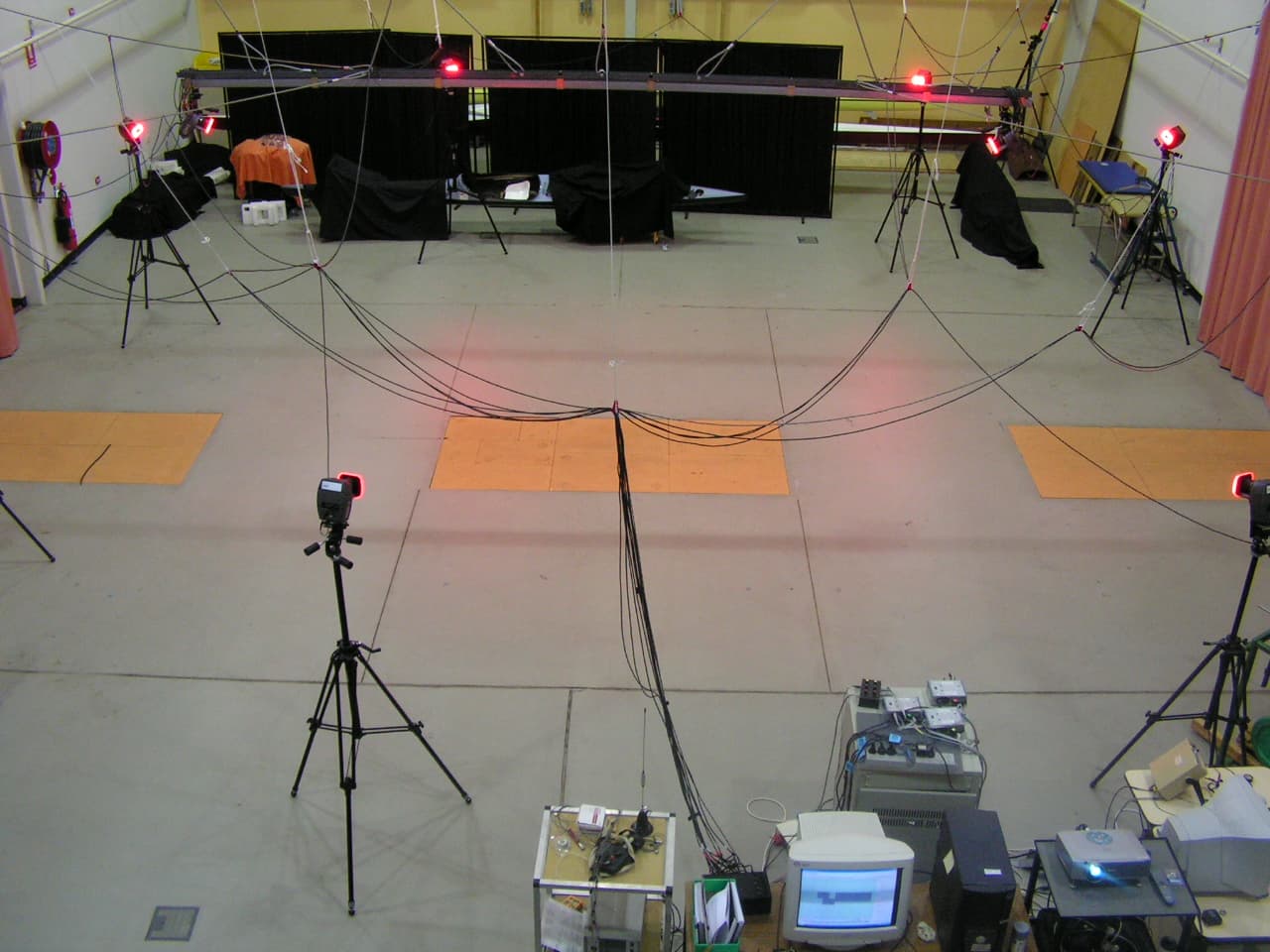
Read further
- Running gait analysis for physiotherapists
Measure the running pattern from a slow-motion clip, put it in the notes, and at review see whether anything actually changed. From € 20 an analysis.
- Running gait analysis in sport and exercise medicine
What 2D video can and cannot measure, with the uncertainty stated. For anyone deciding whether a gait measurement will carry what gets built on it.
- For podiatrists: what video gait analysis does not measure
Honest answer: foot and ankle are the weakest part on 2D video. What this adds is what happens above the foot, and what changes when the orthosis goes in.
- Running gait analysis for coaches
Cadence, overstride and contact time as numbers, so that across a season you can show what changed instead of asserting it. From € 20 an analysis.
- For running stores: not the gait analysis you already do
This does not tell you which shoe fits. It does show what measurably changes in the running pattern between two shoes: which is a service you can sell on its own.
- Pricing for running gait analysis
Unlimited for € 129 a month, or from € 20 an analysis on a bundle. Bundles do not expire. First analysis free.
- Evidence: how it measures and what has been tested
Which model sits underneath, how gait events are established, what has and has not been validated, and why this is not a medical device.
- Recording protocol for running gait analysis
Camera position, frame rate, clothing and duration. The recording determines the measurement more than the software does, and this is what has to be right.
- Try it: the first analysis is free
One complete analysis with the report, no watermark and no card details. You need a twenty-second slow-motion clip and nothing else.
- Bike fitting with the camera you already own
Measure your client on the trainer from an ordinary clip. Joint angles per crank revolution, adjustments in millimetres, a report for the file. From € 28 an analysis.
- Overpronation: what it is and what it does not predict
What pronation is, why sorting runners into neutral, over- and underpronating says less than long assumed, and what you can usefully look at instead.